Centrae
Designing a scalable B2B revenue growth platform from 0 to 1, built to help private equity firms accelerate portfolio company growth.
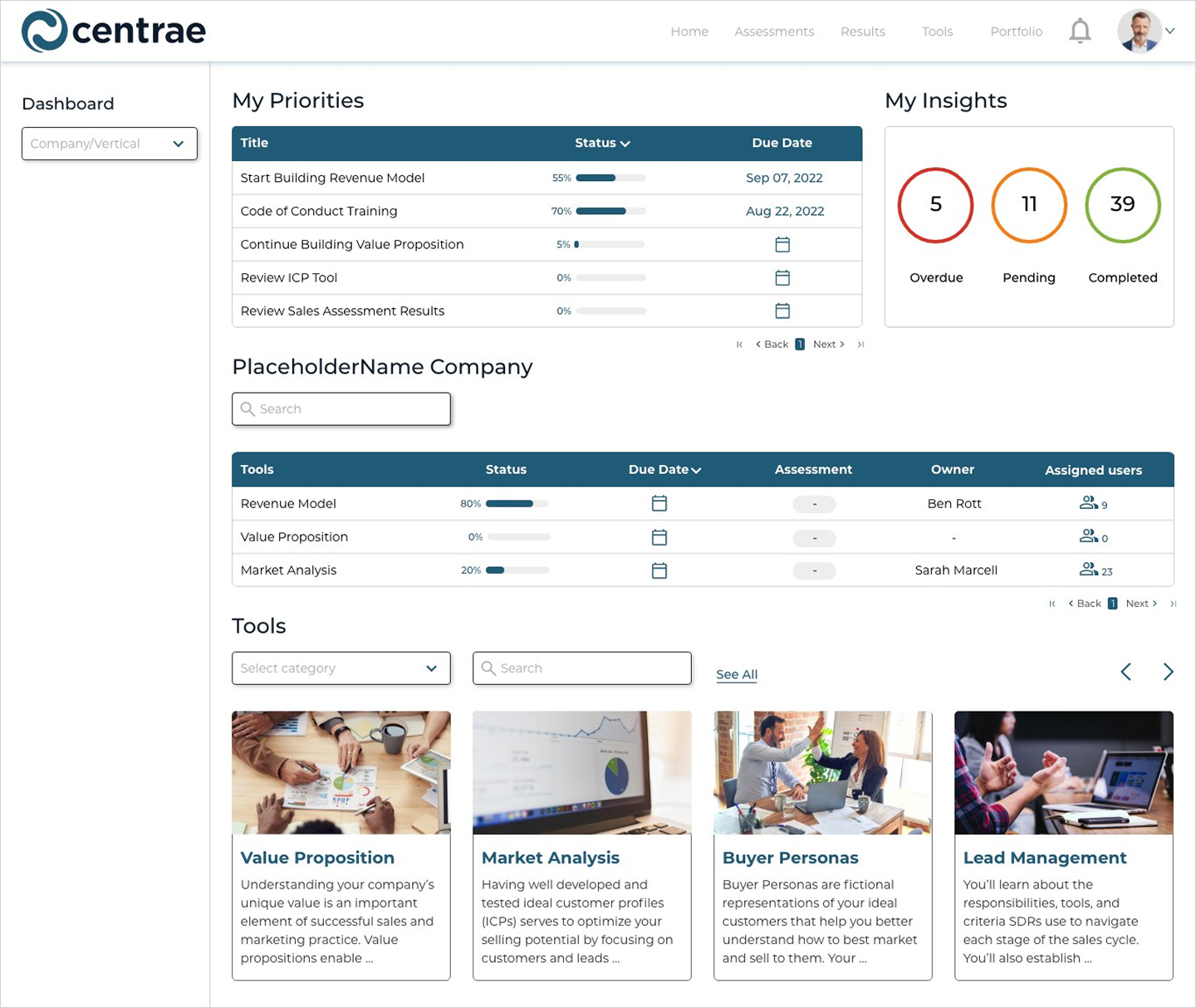
From a concept and a few screens to a shipped product
When I joined Seagage, Centrae existed as a concept and a handful of screens, developed off the back of another internal system the company already had. From there, I did the actual product and UX design work: designing the flows and building the platform's design system from scratch.
Centrae helps growth stage companies run their go to market strategy from a single system, combining proven sales and marketing playbooks so leadership can identify blind spots, build a clear strategy, and track the metrics that actually indicate growth. The platform was also built to be white labeled, which added a real layer of complexity to nearly every design decision.
My main stakeholders were Seagage's IT Director and Product Director, and every handoff went to the dev team through Zepplin.
Designing on borrowed research
I wasn't part of the original discovery research, that work had already been done on the internal system Centrae grew out of. My research was to analyze that system's behavior and existing research, and design from what it told me.
As an early stage company, Centrae didn't have budget for dedicated research. I did my best to benchmark against the existing system's data, but it was never research specific to Centrae itself. We also handled on demand feature requests: when a high value or high volume customer asked for something, we'd evaluate feasibility and design and build it if it was viable.
A design system built to scale across hundreds of pages
I created and governed Centrae's design system: approximately 28 foundational components supporting hundreds of compound components, designs, and pages across the platform. Given the breadth of the product, playbooks, sales tools, and marketing resources living in one system, built to be white labeled on top of that, the design system was what kept the experience coherent as the product's surface area grew.
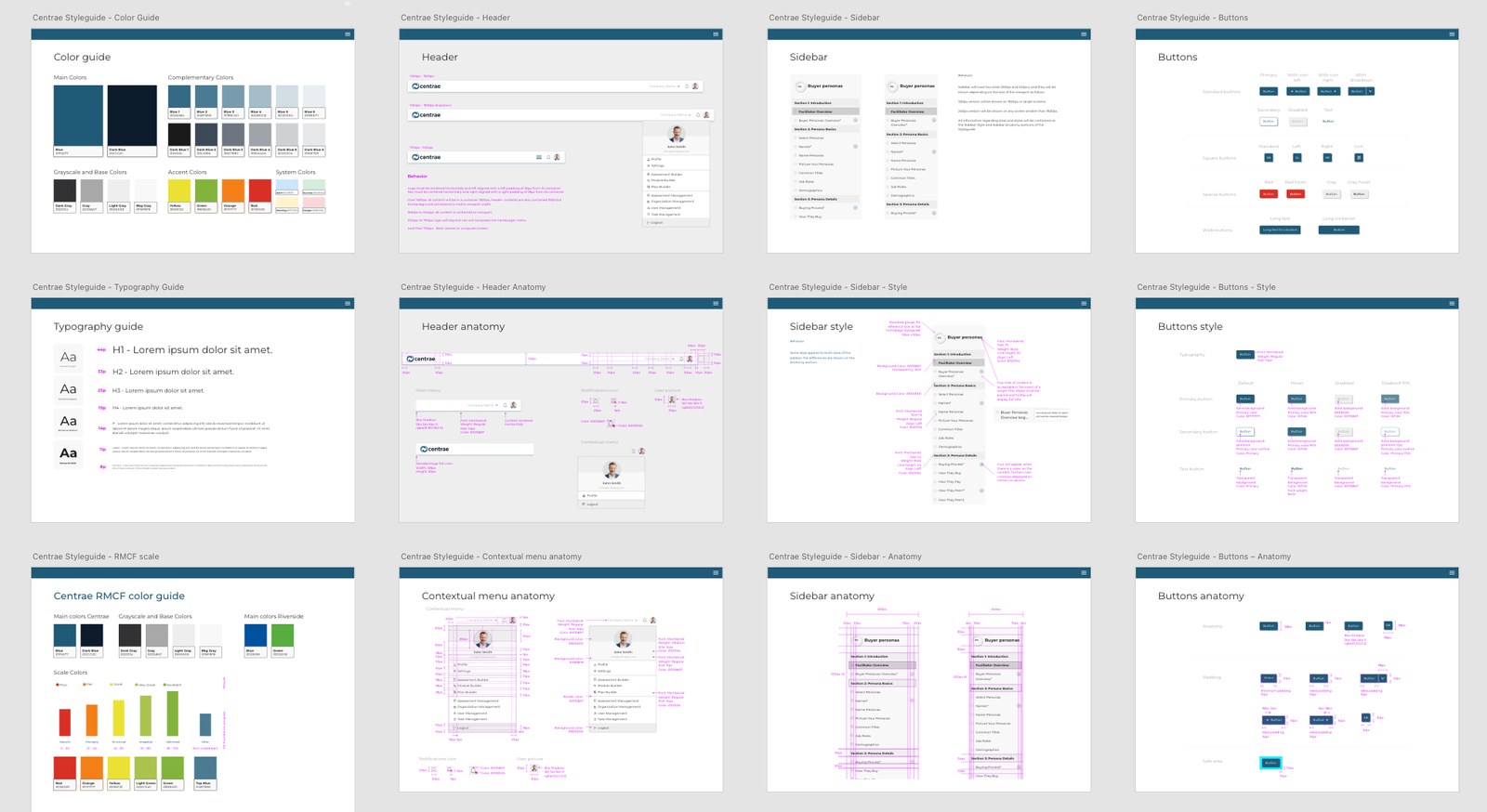 Foundational components — color, typography, header, sidebar, buttons
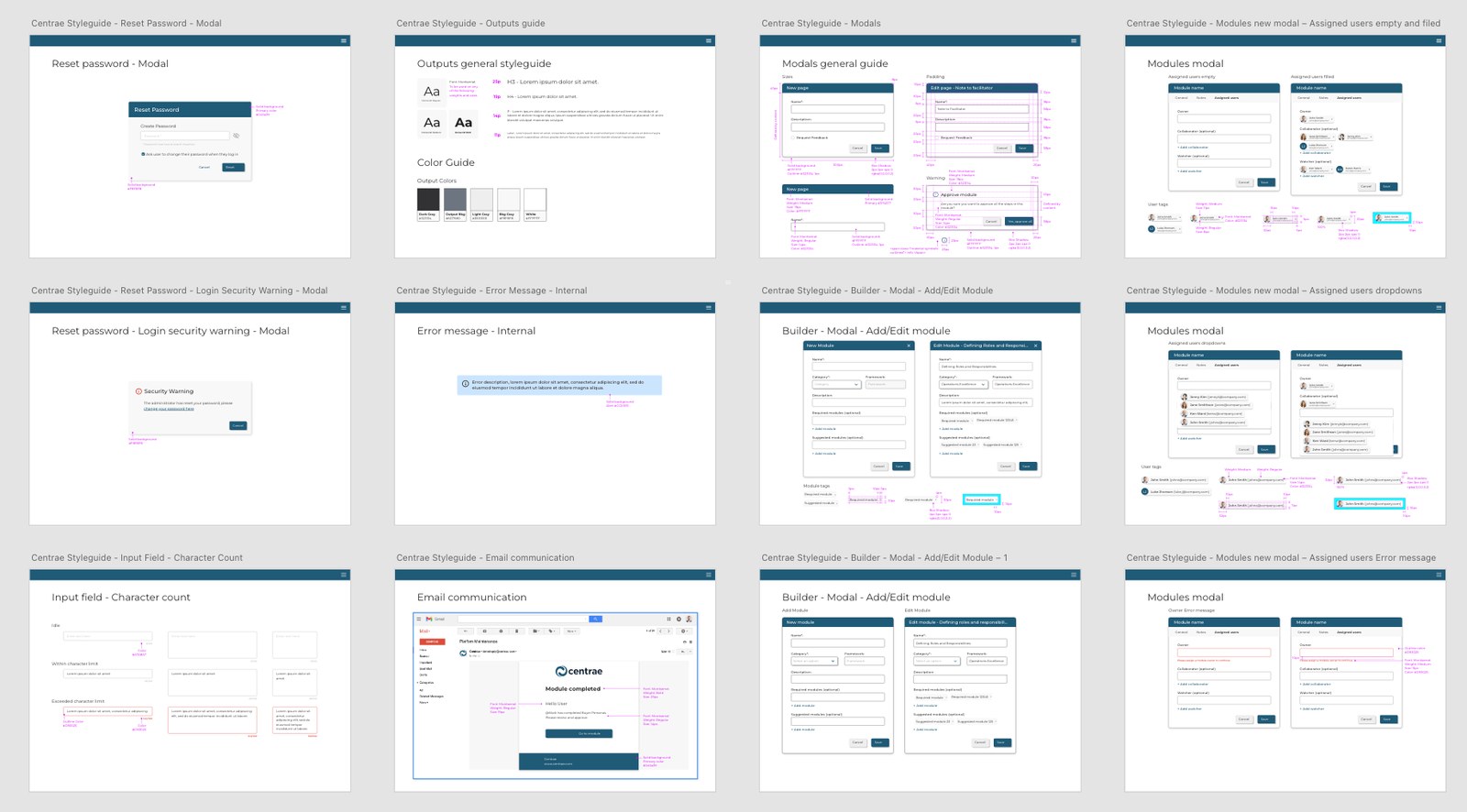 Compound components — modals, module builder, assigned-user tables
I also contributed to the early concept and design of an AI companion meant to guide users through strategy execution inside the platform. By the time I left Seagage, this was under development, and the design work was almost a finished feature.
Prototypes built for developers, not for testing
Without a research budget, prototyping served a different purpose; I built prototypes strictly to communicate interaction design to the dev team, not to run usability tests. Being at a startup meant taking on more than the role technically required; at points doing nearly every task a full product team would normally split across several people, occasionally even pitching in with front end ideas without doing the front end build myself.
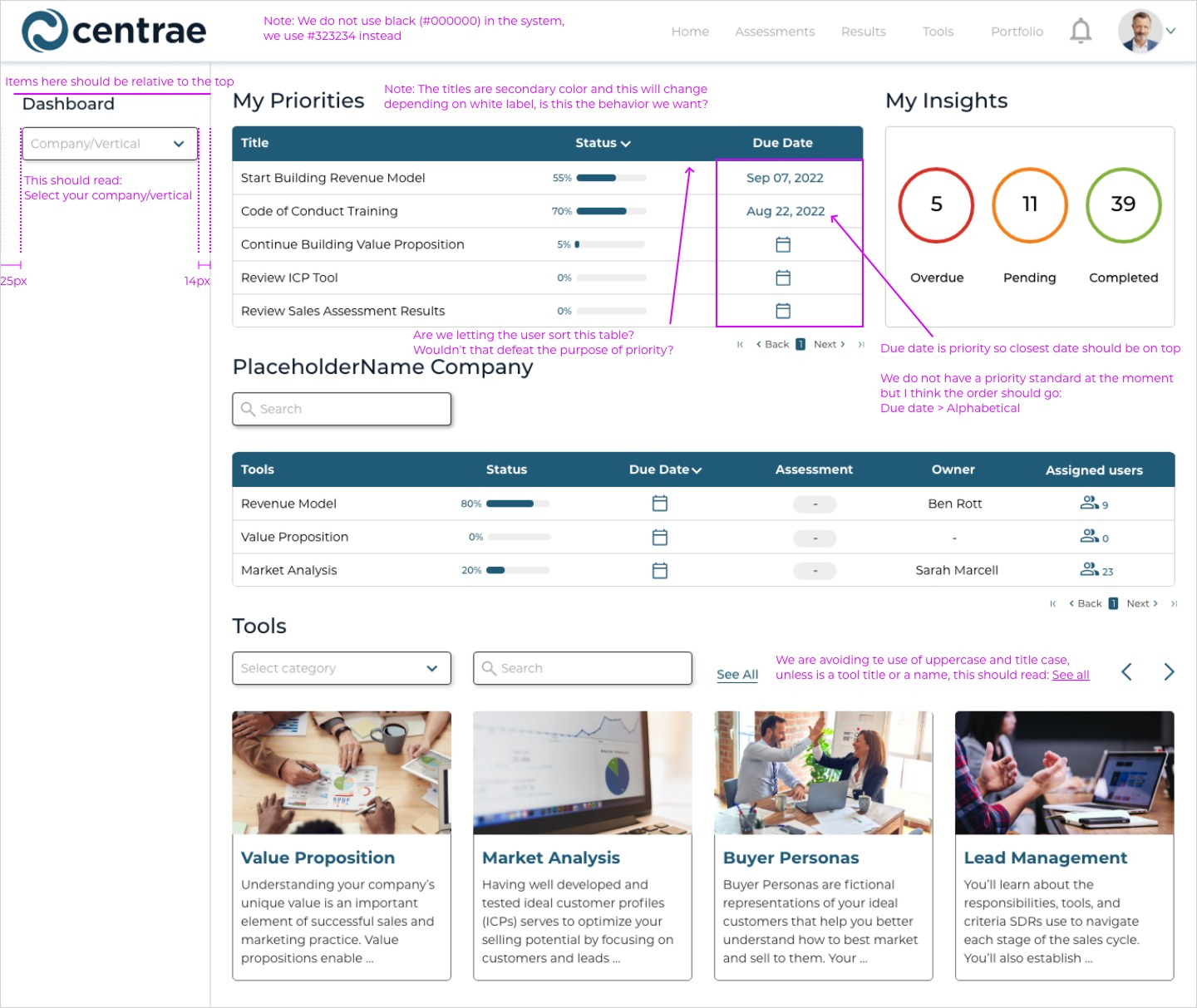 A real handoff iteration, with design QA comments — including a note on how title color needed to adapt per white-label client
Scale of the system
What building a 0-to-1 design system taught me
Startups ask you to do more than your role technically covers, but it's also the most rewarding way to work, because you can see your own knowledge and input actually shape the product. Building Centrae's design system from the ground up, and maintaining it while creating the UI and components on top of it, taught me how much a design system's backbone influences every design decision that comes after it. It also pushed me toward genuine end to end ownership, in a way a role at a larger company rarely does by default.
With more experience now, I have a much deeper understanding of how design systems should be structured, maintained, and evolved. Building Centrae’s system from the ground up taught me how foundational decisions around components, variants, patterns, and visual language affect everything built on top of them. Today, working with design systems feels like a natural part of my design practice, whether I am building one from scratch, maintaining and evolving an existing system, or extending it to support new products and experiences..